



Projekt launch at the 99th birthday of a visionary
Herbert W. Franke’s electronic art from the 1950s brought to immersive words by AI
A research project ofthe art meet meets science – Foundation Herbert W. Franke in co-operation with the AI artist Huichuan Wang, Alumni and current Teaching assistant in the Computational Arts MFA program at Goldsmiths University
Artistic curators: Prof William Latham (Goldsmiths University) and Dr Rachel Falconer (Head of Subject for Creative Technology, Goldsmiths University)
Today marks Herbert W. Franke’s 99th birthday. On this occasion, the Foundation is delighted to announce a research project spanning several months in collaboration with Huichuan Wang, an artist working at Goldsmiths, University of London. The project goals are threefold:
– first, to analyze Franke’s early generative photographs using AI;
– second, to define algorithms based on Franke’s theoretical framework;
– and third, to compile these historic works into a dynamic sequence.
The Foundation Herbert W. Franke initiated the project together with William Latham, a computer animation pioneer and longtime colleague of Franke‘s. The project will be presented at events in 2027 in honor of Franke’s work as a pioneer of generative art and theory, in celebration of the 100th anniversary of the computer art pioneer’s birth.
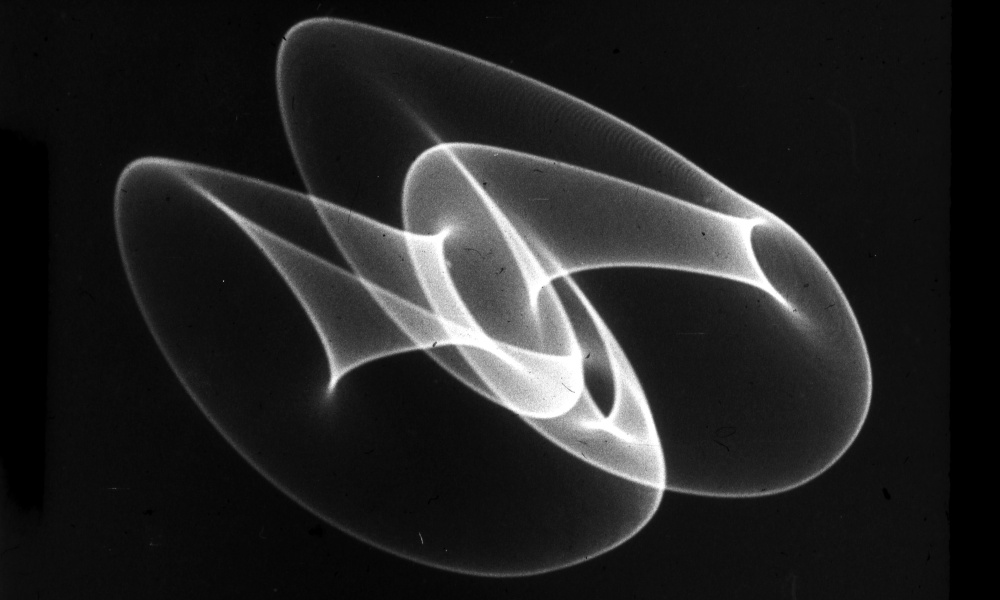
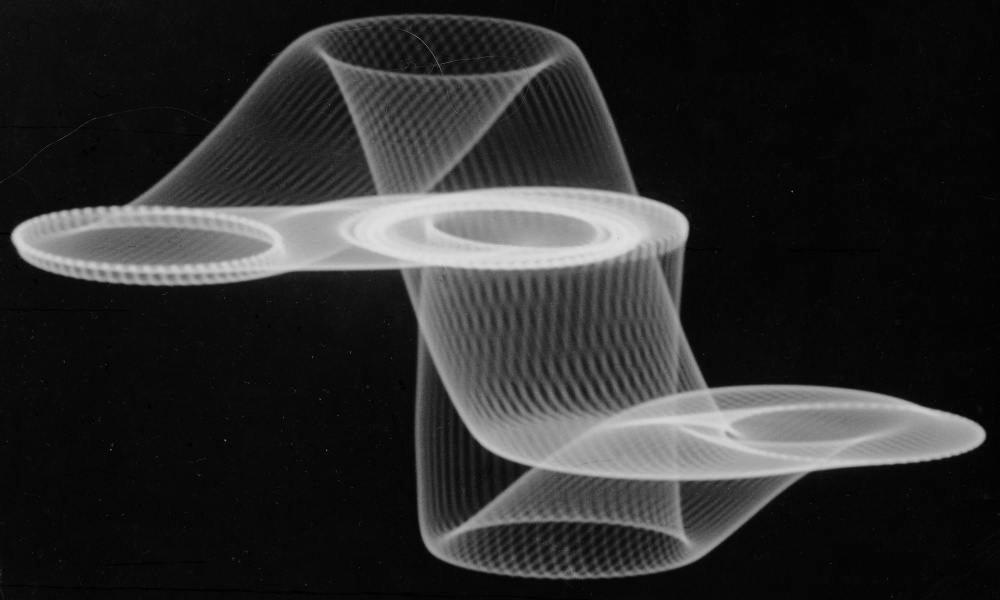
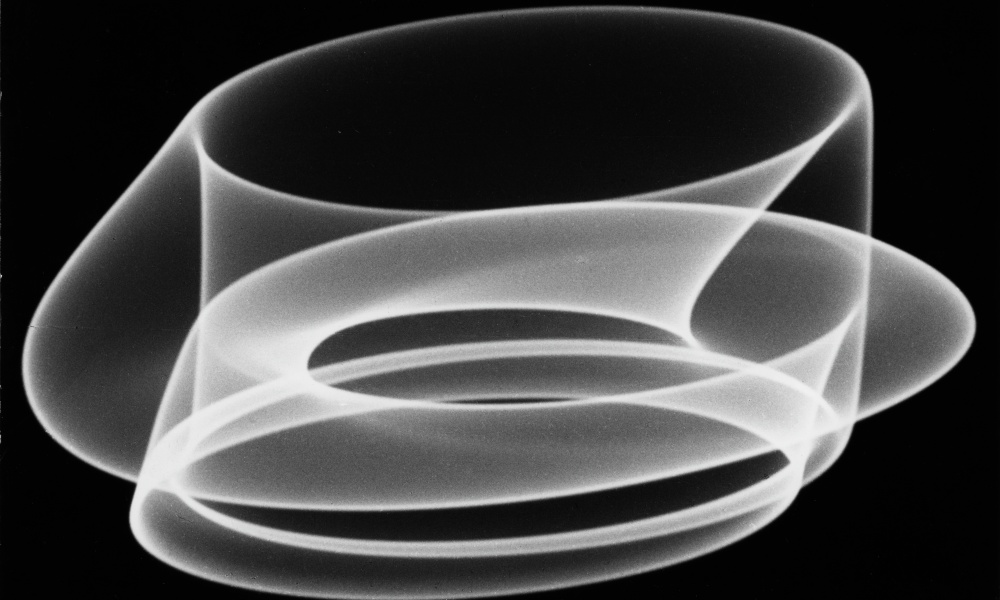
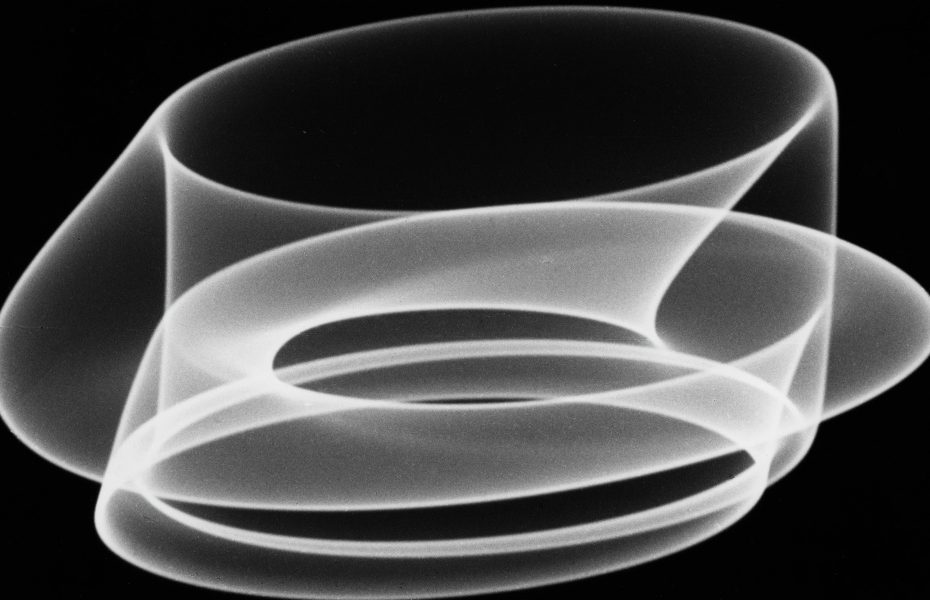
The research project focuses on Franke‘s two thousand generative photographic works from the first ten years (1953-1962), already fully digitized by the Foundation. These early generative artworks contain several series such as Lichtformen (light forms) and Wellenformen (wave forms) as well as the Oszillogramme (oscillograms) and Tanz der Elektronen (dance of the electrons), both calculated using an analog computer. Like modern quantum computers, an analog computer also works with the physical—literally “analog”—modeling of solutions: Herbert W. Franke used his analog computer to process electrical signal flows into complex oscillatory structures, which he photographed from the oscilloscope. These art experiments led him to a theoretical framework based on mathematics which Franke first published in 1957 in his book Art and Construction. This will be published soon for the first time in English by the DKV in collaboration with the Foundation as part of the Edition Herbert W. Franke.
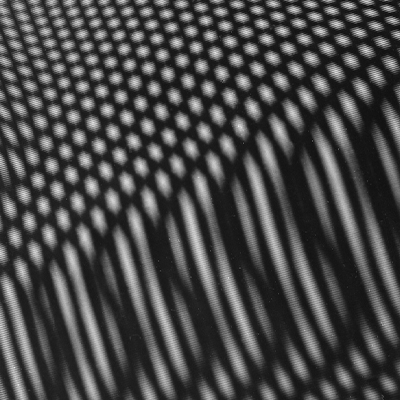
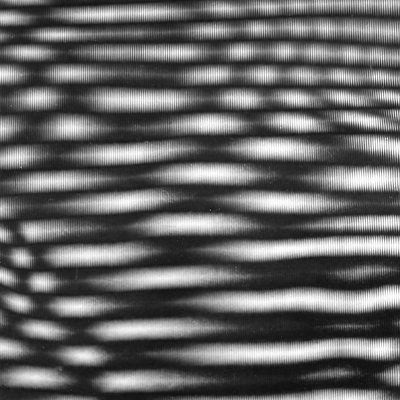
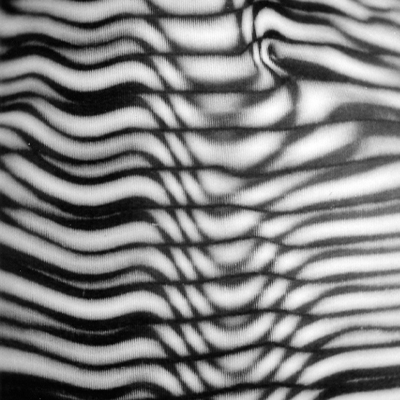
Franke wrote in Art and Construction, that finding rules is the new creative act. Ultimately, everything else is creatively irrelevant, since the random processes necessary for art can be generated by machines. But, Franke also describes a problem that could not be solved in his era: although algorithmic mathematics could describe theoretically multi-dimensional structures of great beauty, only two-dimensional cross-sections could be visualized at that time. He termed this an unpassable threshold. This statement lies at the heart of the project. The goal is to use an artificial intelligence model to overcome this limitation of his artworks. To achieve this, Huichuan Wang employs a locally-run working diffusion model operating in latent space. No text prompts will be used for the new generative creation at any stage, only Franke’s historic photographs will be analyzed as an input, the model learns understanding of their internal logic then produces the output.
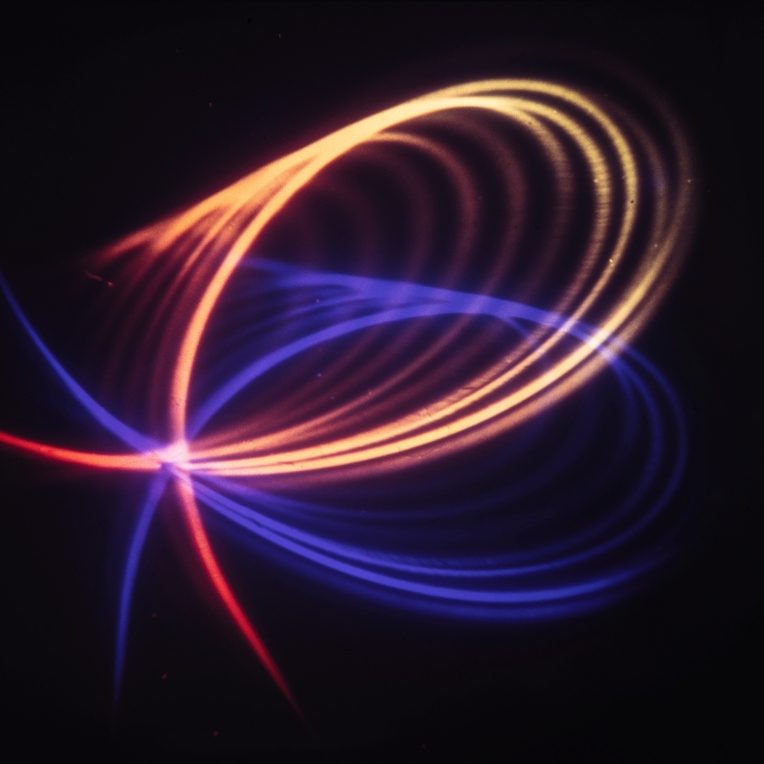
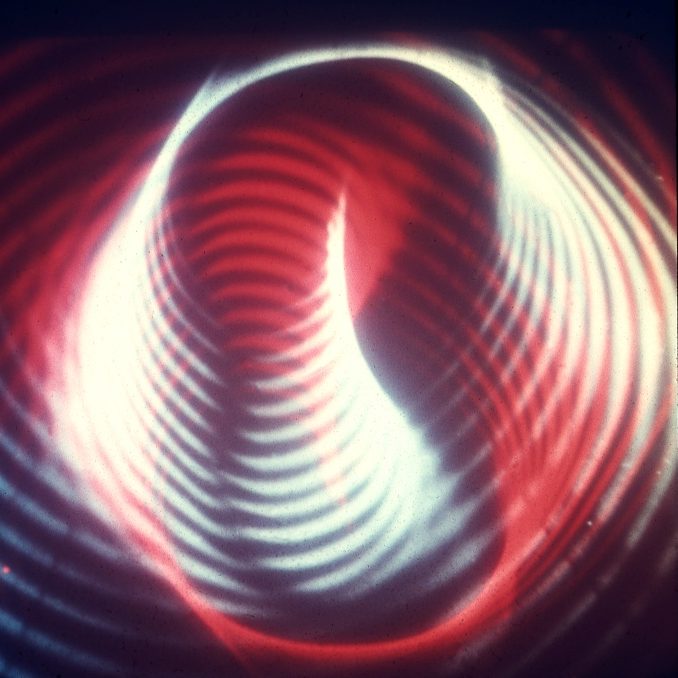
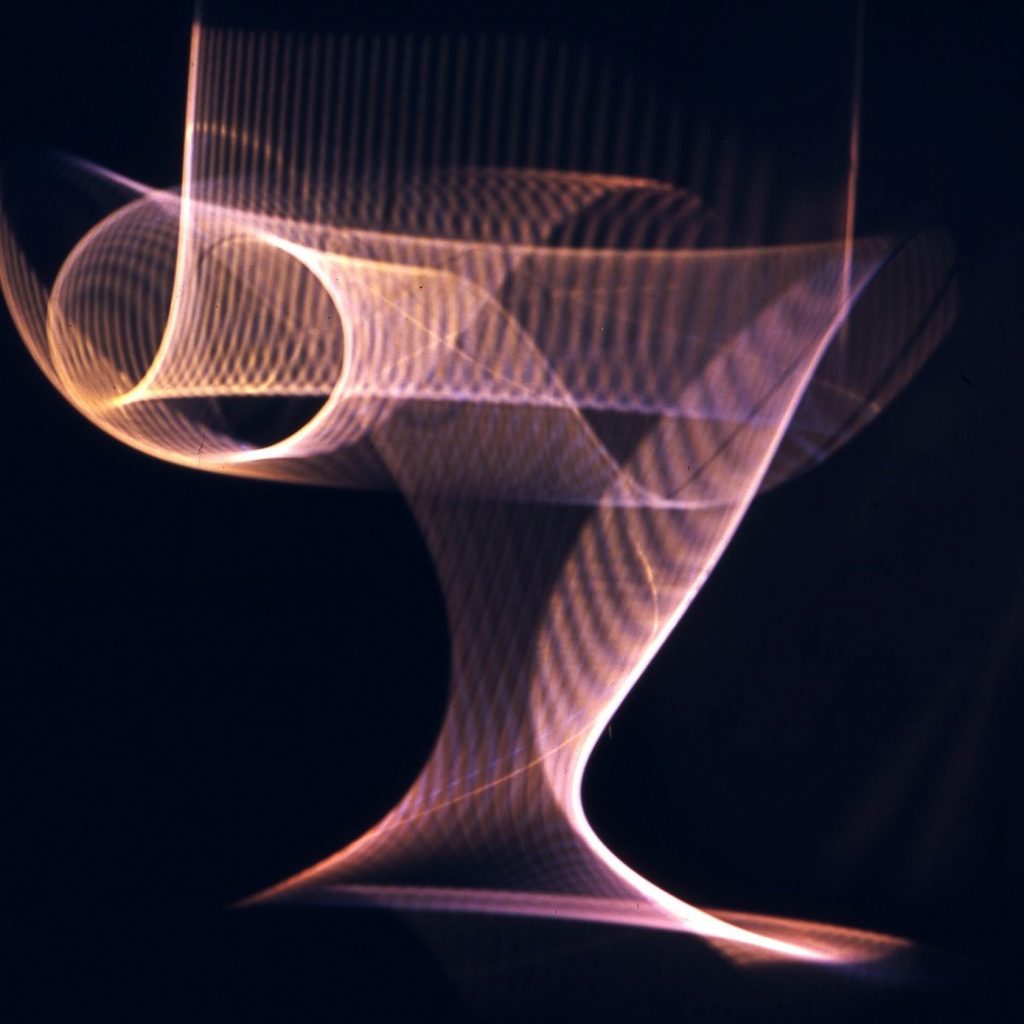
Franke’s theoretical framework is embracing a conceptual nature that is now fully visualized in immersive worlds. Huichuan Wang explains the internal process details: “The model compresses every image into a mathematical space of several hundred dimensions. In this space, each image corresponds to a point, and similar images cluster nearby. The geometry of this space is entirely shaped by the training data, which reflects Franke’s visual logic. This includes the preference for continuous curves, the logic of superposition, and the tension between order and statistical disorder.” The progress of this work will be discussed with the Curators and the Foundation and then adapted to dynamic visuals of the different series in a research project lasting several months.
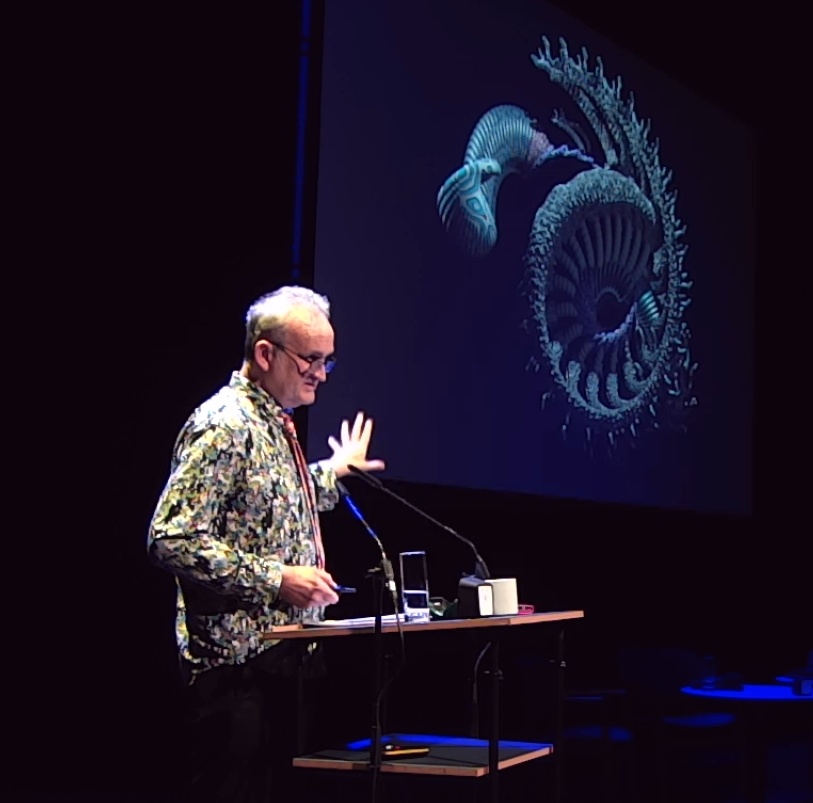
William Latham, one of the project curators, comments: „I knew Herbert for decades. Reading his seminal book Computer Graphics – Computer Art from 1971 as a student was a huge influence and one of the reasons I first moved into computer art. As a pioneer of generative art, Herbert’s creative and theoretical work has been truly groundbreaking. In collaboration with Goldsmiths Computational Arts we are delighted to honor him through this project, which brings his vision into the new era of AI art.“ Susanne Päch adds: “It is wonderful that we are able to bring the envisioned project to life for Herbert’s 100th birthday with this dream team. After all, William was one of those artists whose work Herbert had followed and greatly admired for decades. I want to express my deepest gratitude to everyone involved.”
More about the Artist Huichuan Wang

Huichuan Wang is an artist and creative technologist based in London, whose practice bridges painting and computational systems through a methodology she calls “Techno-Craft.” She explores how the granularity of the physical world can be preserved within the smoothness of the digital realm, investigates the symbiotic potential of human intuition and machine intelligence. Her engagement with Franke’s work continues this inquiry: where Franke sought to unite mathematical structure with aesthetic form, Huichuan extends that lineage by giving his multidimensional spaces a visual, temporal embodiment through AI.
Huichuan holds a BA in Visual Communication from the Central Academy of Fine Arts (CAFA), Beijing, and an MFA in Computational Arts from Goldsmiths, University of London. She has exhibited internationally at leading institutions, including the V&A Museum (London) and the CAFA Museum (Beijing), and has contributed to collaborative projects recognised by the Lumen Prize and Prix Ars Electronica. Alongside her studio practice, she is deeply engaged in academic dialogue, currently teaching at Goldsmiths following her role as a Visiting Lecturer at CAFA.