




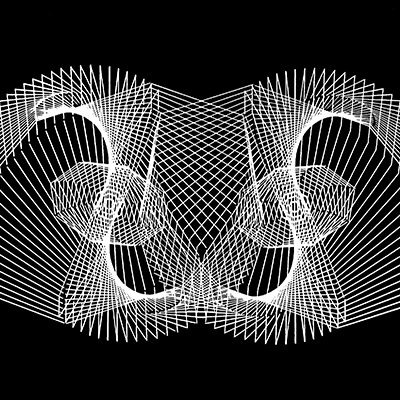
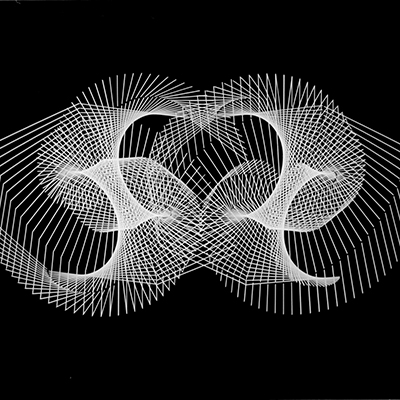
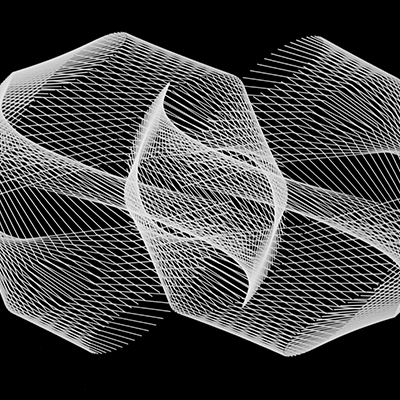

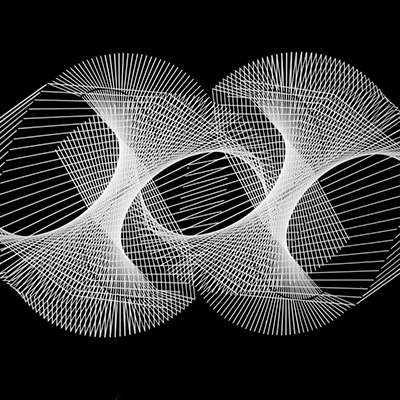
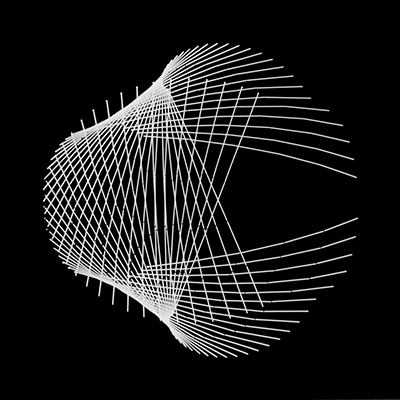
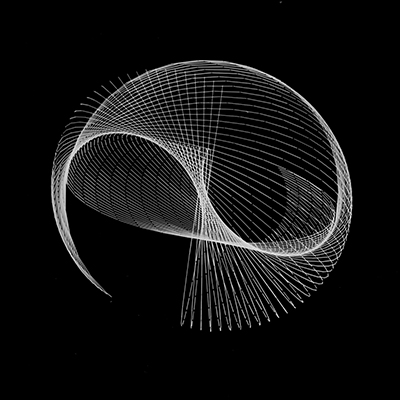
Series Rotations / Projections (1974)
The two films Rotations andProjections (orignally Rotationen and Projektionen) used one of the earliest three-dimensional programs for the graphic real-time output of these images as a projection on a two dimensinal screen. They were calculated and displayed with an interactive graphic screen of the Siemens Research Laboratory, Munich, in connection with a digital data processing unit. The unit allowed interactive operation – work under visual control with the possibility of intervention in the sequence; a keyboard is used to determine the way in which the basic structure given by the program is realized–for example, by specifying the number of picture elements, the angle of intersection, the speed of the sequence, and so on. The movement could be stopped for a static image any time. The sequence was documented in real time on a 16 mm film. That led once in a while to slight flickering of the images due to occasional frequency differences between the film camera and monitor with more complex image structures.The program for scientific purposes used for Herbert’s art work was coded by Gerhard Geitz, Monika Gonauser, Egon Hoerbst and Peter Schinner. However, Franke himself created the visual design of this work and then also controlled the real-time movements on the computer.
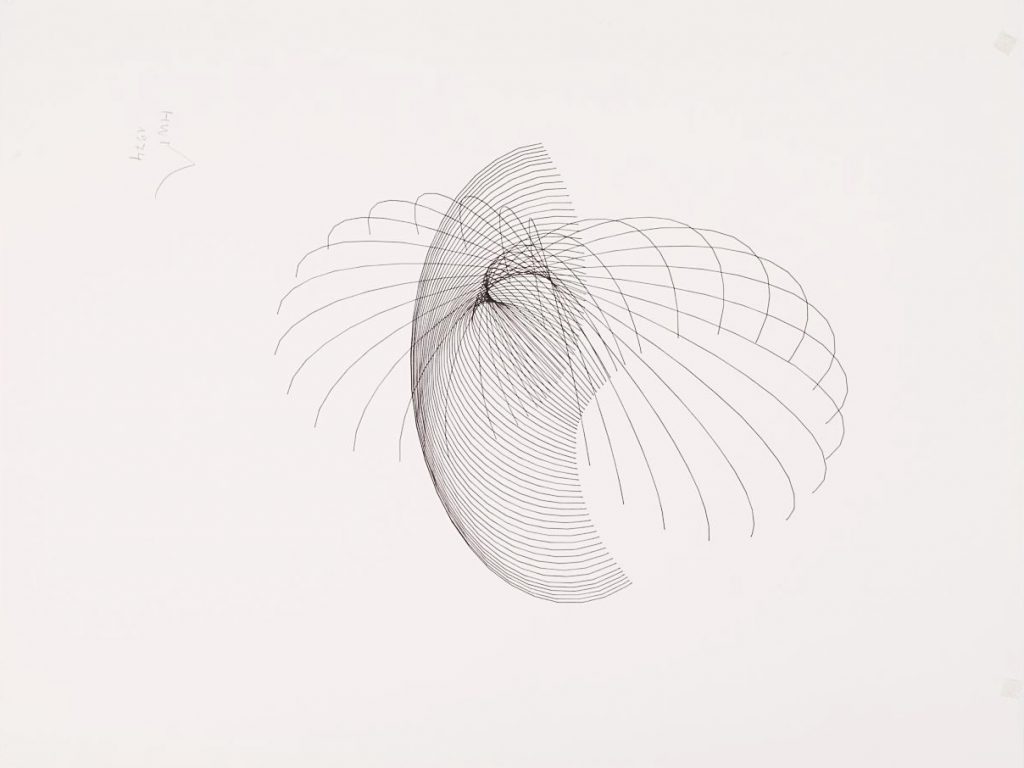
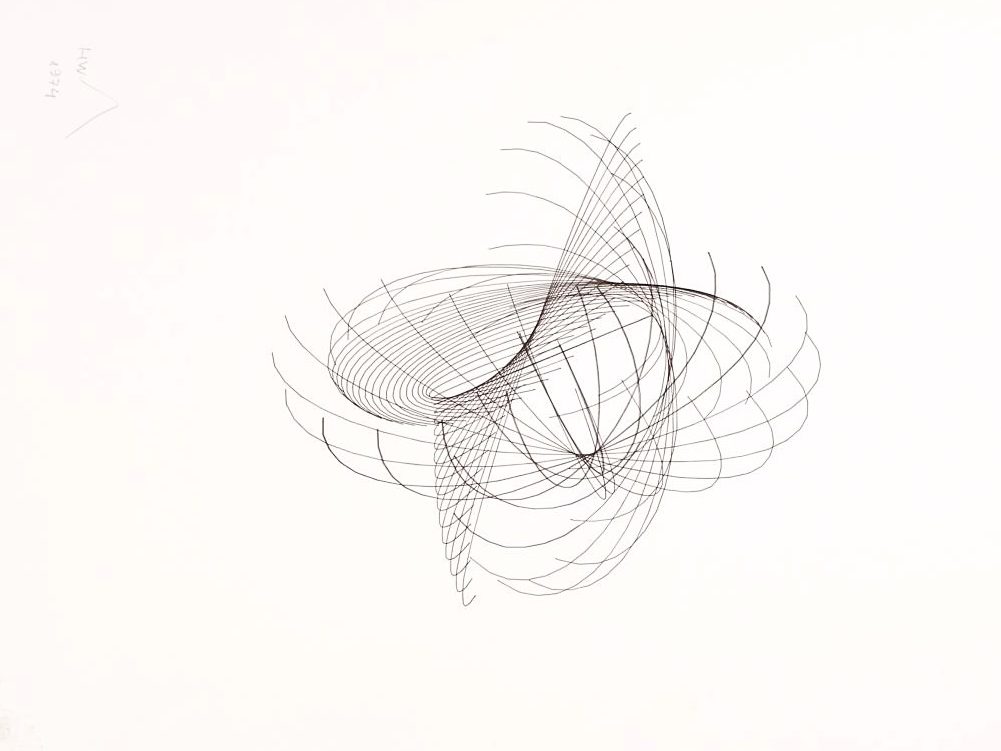
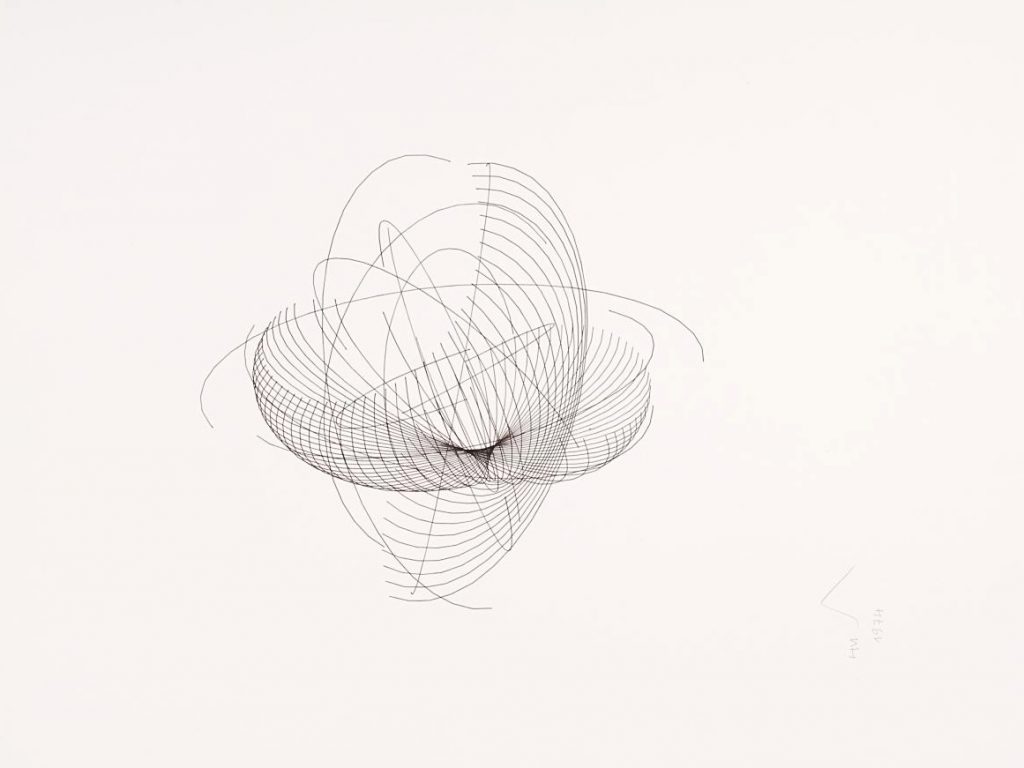
Franke produced a few static plots, which he later referred to as Cluster to distinguish them from the moving sequences. The static images’ design allowed for a much more complex structure because there were no limitations as with the dynamic sequences calculated in real time. In 2017, Franke produced these plots as “reliefs” in DIN A3 format. For this series of three images per motif (plus two artist’s proofs), he used a DIN A3 Braille copying system, which uses a chemical process to give black lines a raised structure. Franke had previously used this method in 1995 for other motifs in this series. At that time, however, the Braille copier was only available in DIN A4 format.

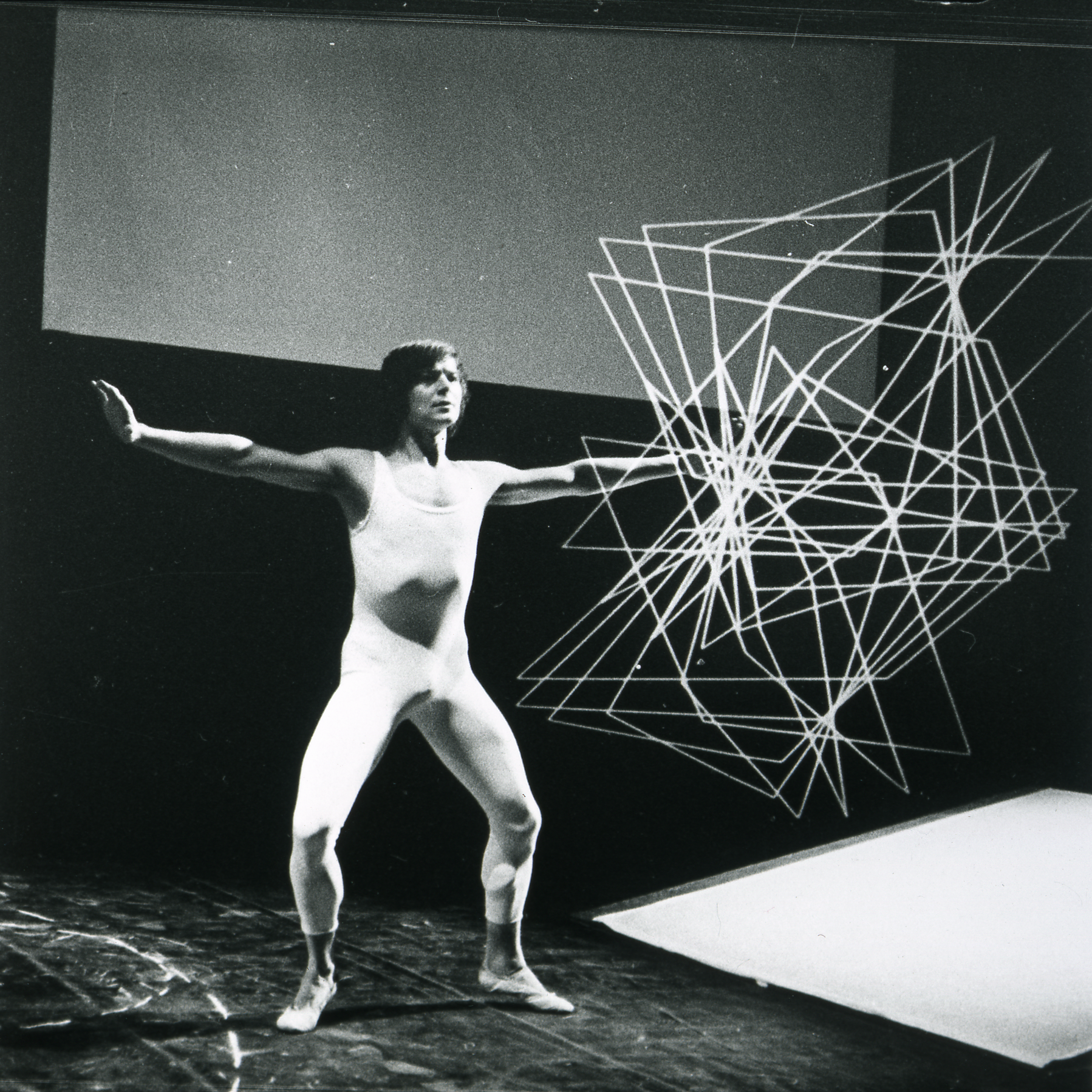
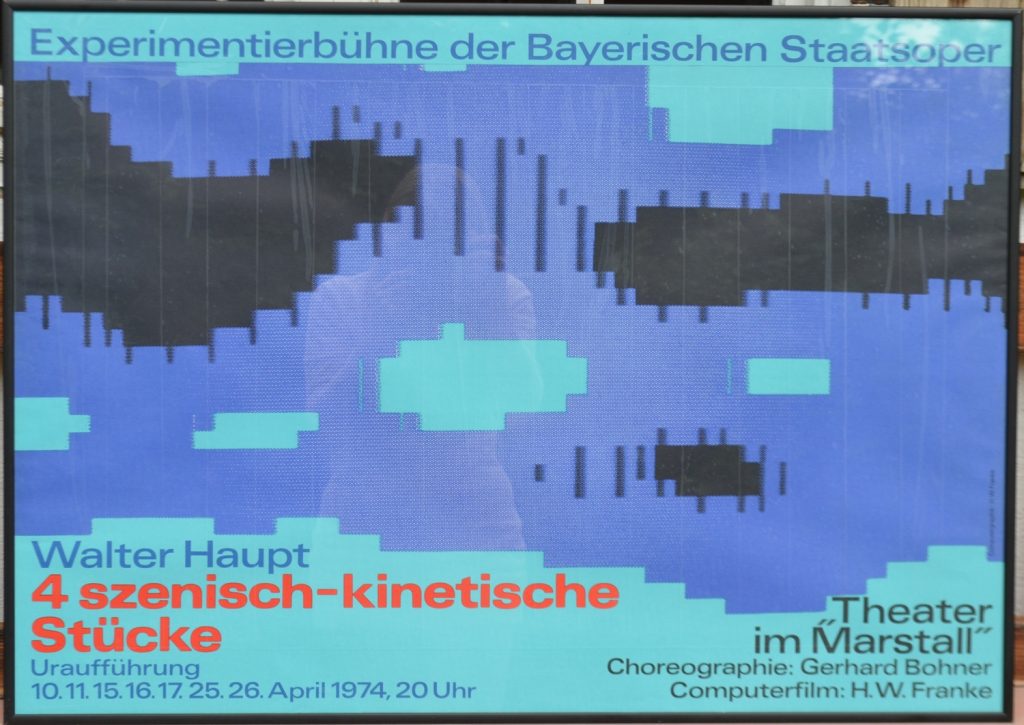
The film sequences from Projektionen were used in 1974 as a stage set, projected onto a screen, for an experimental dance performance with Gerald Bohner in the “experimental stage “Experimentierbuehne” of the Bavarian State Opera in Munich, directed by Walter Haupt.
Herbert W. Franke also used the sequences to create the longer film called Rotationen with sounds by his friend and acoustic artist Peter Scheffler, who was also a professor of psychology at the University of Innsbruck. Scheffler invented what he called a “Robot”. It processed and converted the cosmic radiation from outer space into sound by electronic means.