




Herbert W. Franke’s First Curated Exhibition in 1968
In 1968, Herbert W. Franke was invited to deliver a lecture at the summer conference The Computer in the University, organized by MIT and the Technical University of Berlin (TU Berlin). Today, this event is considered a historic milestone, through which MIT sought to pass on its expertise in multi-user systems to the German scientific community. Over 1,000 top researchers laid the foundation for the recognition of computer science as an independent scientific discipline in Germany. Concurrently, Kunst aus dem Computer (Art from the Computer), one of the first exhibitions of computer art, took place.
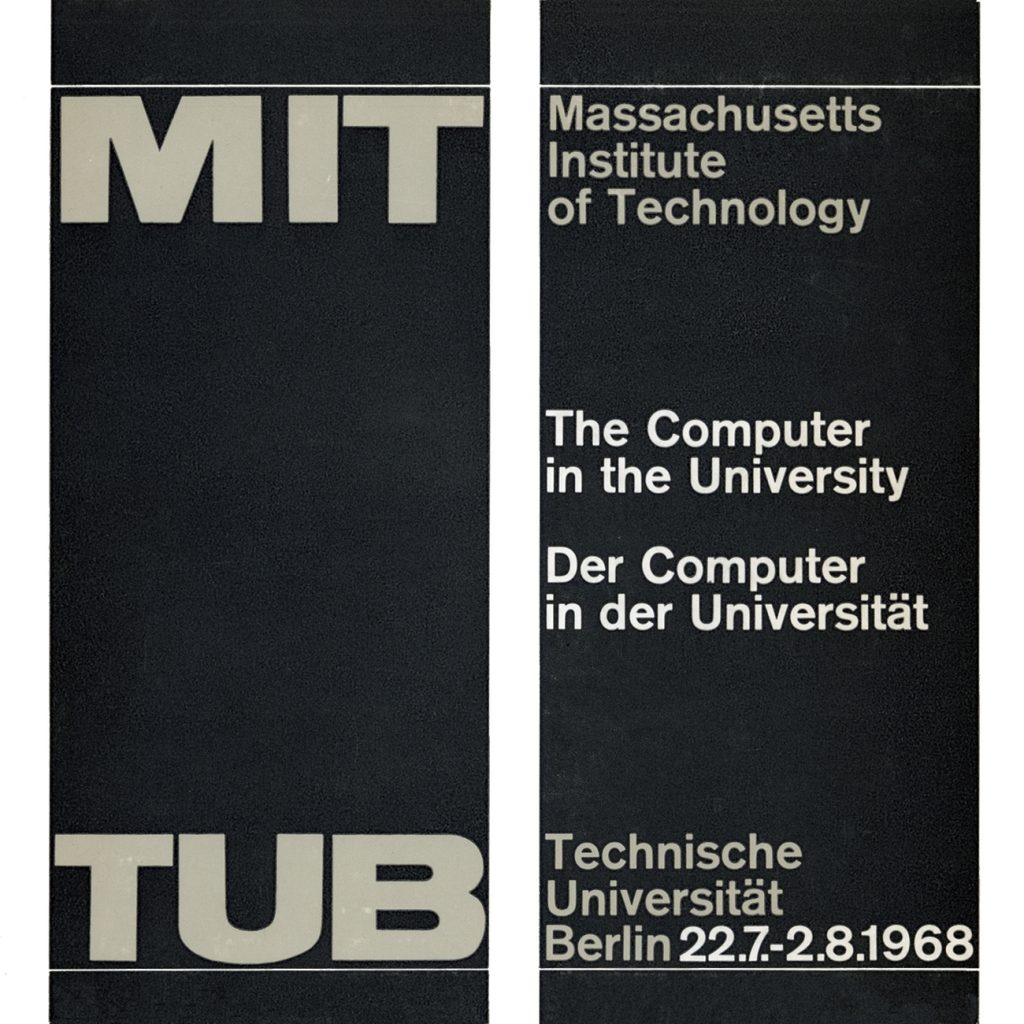
In the context of the Cold War, the event also pursued a political objective: to strengthen the scientific supremacy of the West in isolated West-Berlin. The congress coincided with the height of the 1968 student protests in Berlin. In fact, students temporarily stormed the main auditorium (Audimax) demanding political debates. Among other things, they strictly opposed the use of these technologies, including their application in research. Beyond the political protests, the entry of computers into the cultural landscape was perceived as a massive provocation of the traditional cult of genius. Critics feared that combining art and machines would lead to the demise of cultural values, while established artists feared for the status of their profession.
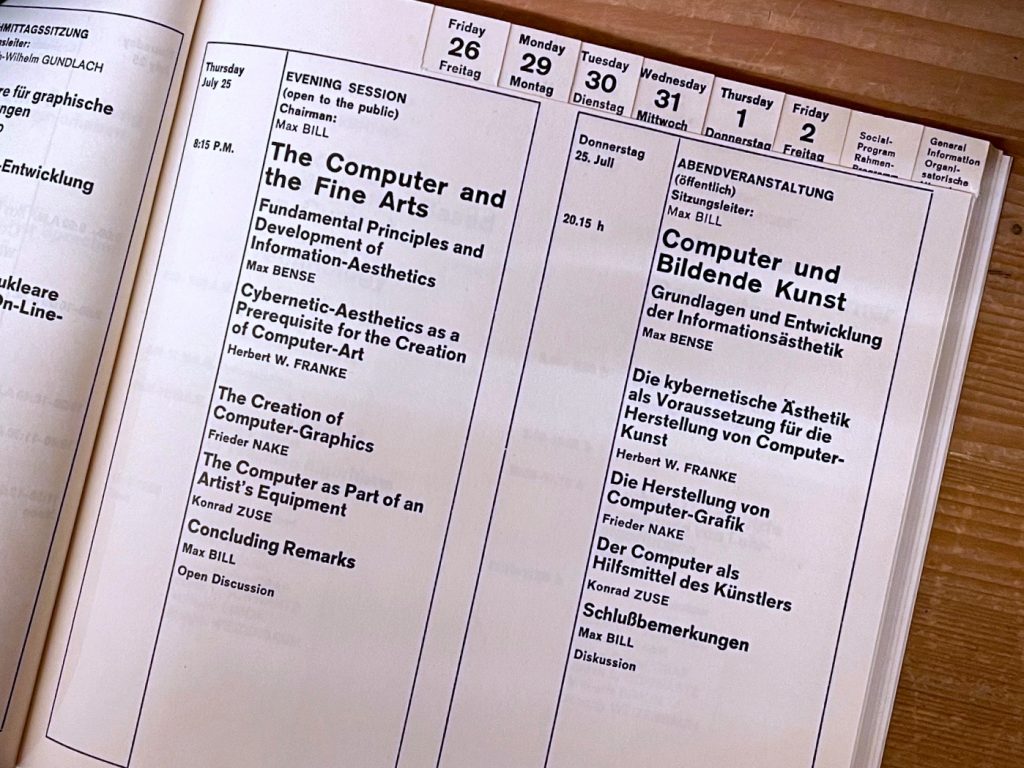
However, the event also highlighted less politically charged subjects—such as the question, of interest to only a few experts at the time, of how digital technology could be utilized for aesthetic research, which ultimately led to the formation of informational aesthetics. In the section “Computer and Visual Arts,” pioneering figures Herbert W. Franke, Frieder Nake, and Konrad Zuse spoke under the chairmanship of Max Bense. The closing remarks were delivered by Max Bill, co-founder of the famous Ulm School of Design, the post-war successor institution to the Bauhaus in Weimar.
The First Exhibition Ways to Computer Art
Herbert W. Franke used his invitation as a speaker at the event as an opportunity to propose a supporting program featuring an exhibition on the paths to computer art. The concept was accepted and integrated under the title Art From the Computer. This exhibition became the nucleus of his worldwide exhibition tour. This early phase was accompanied by Franke’s pioneering theoretical work: in 1971, he published the first edition of his book Computergraphik – Computerkunst (Computer Graphics – Computer Art) through Bruckmann Verlag. Today, it is regarded as the world’s first comprehensive textbook and compendium to provide a methodical foundation for this newly emerging art movement.
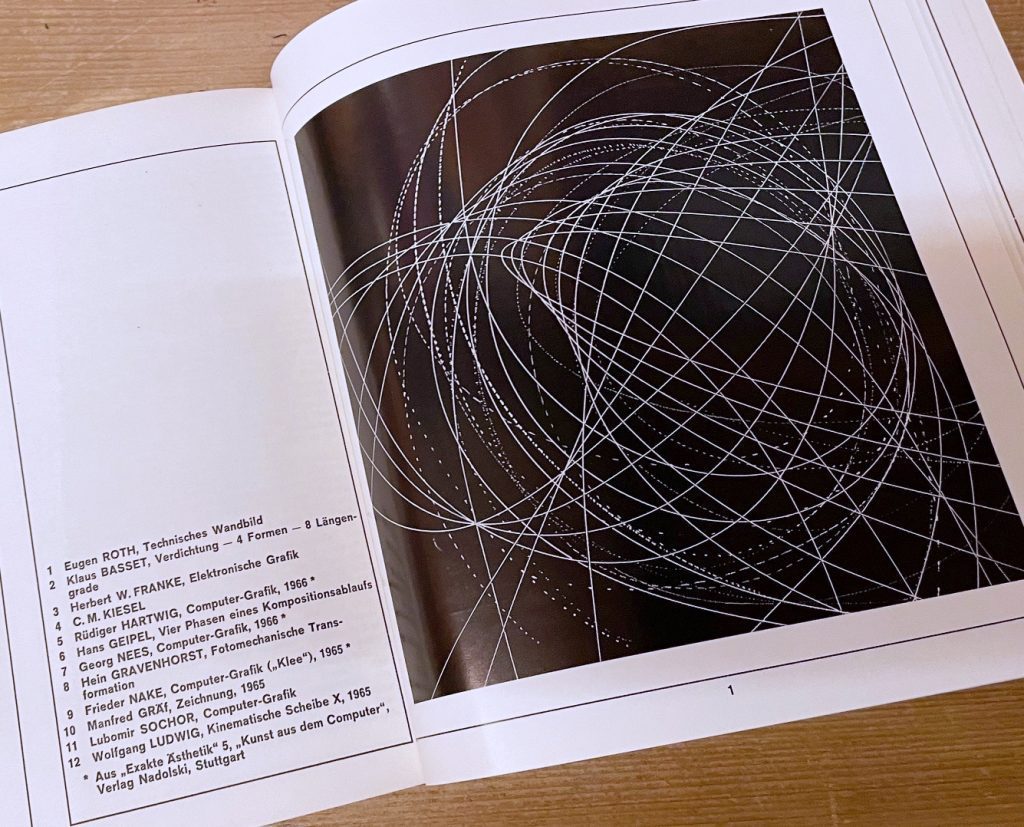
Gerd Klemm wrote in the appendix of the conference catalog:
“This exhibition is not intended to make any point, nor should it set standards for the validity of contemporary art work. It is not meant to declare a certain art trend. Instead, it should be a stimulous to an intellectual – and also visual – discussion.”
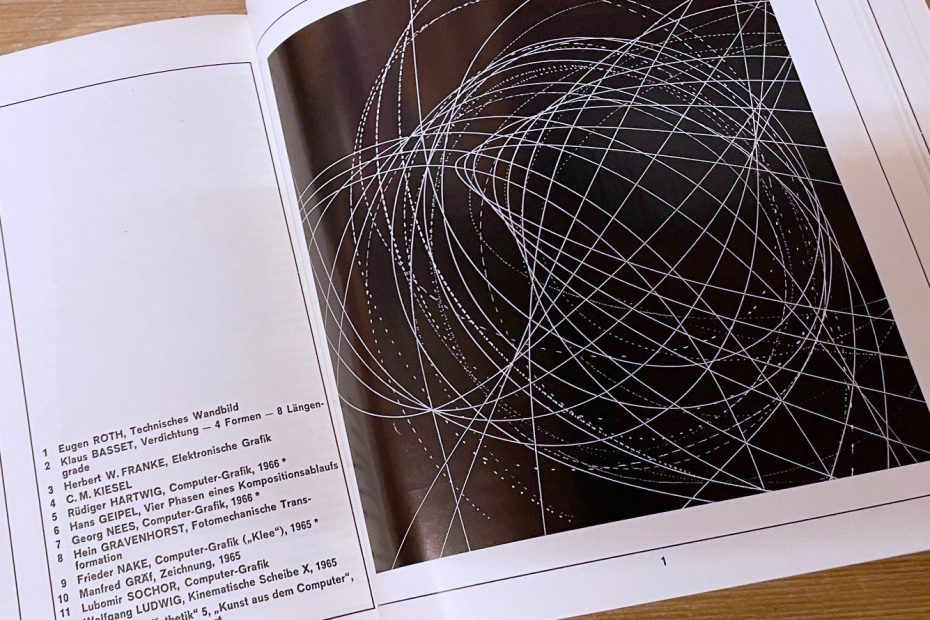
The exhibits followed Franke’s concept, according to which the defining element of this new art form was not the technology employed, but exclusively the constructive element. However, he realized early on that the computer, as a universal art machine, offered an immense advantage over all other artistic methods. The exhibition featured works by Klaus Basset (concrete art), Herbert W. Franke (electronic graphics), Hans Geipel (concrete art), Manfred Gräf (conrete art), Hein Gravenhorst (generative photographer), Gottfried Jäger (generative photographer), Wolfgang Ludwig (Op-Art artist), Frieder Nake (computer artist), Georg Nees (computer artist), Eugen Roth (object-based generative art)
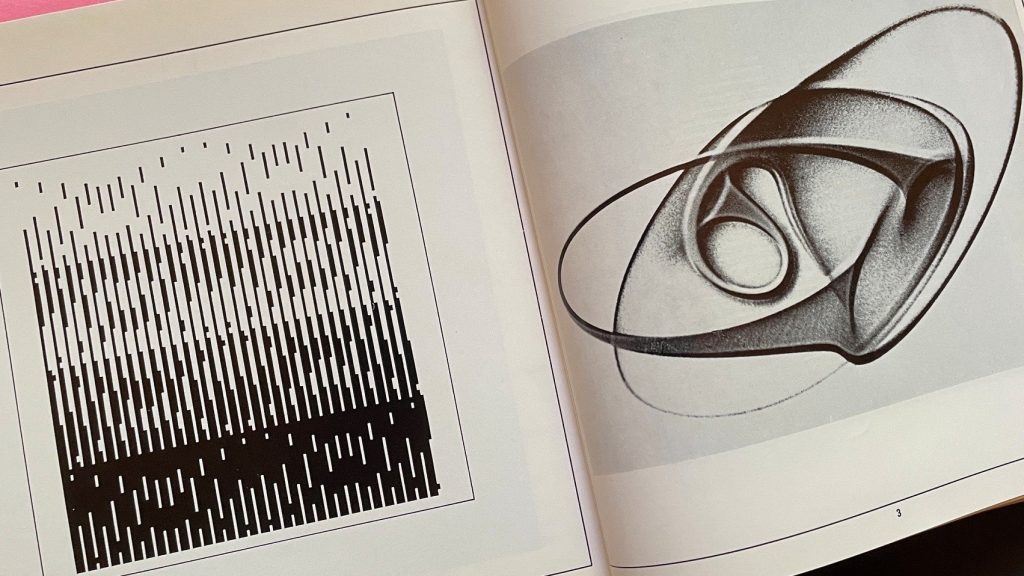
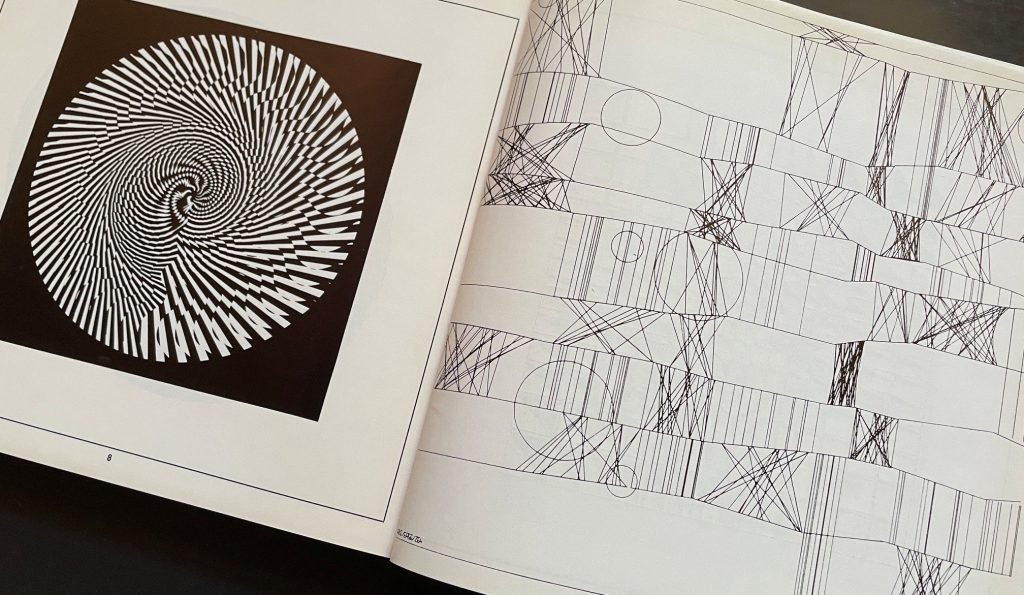
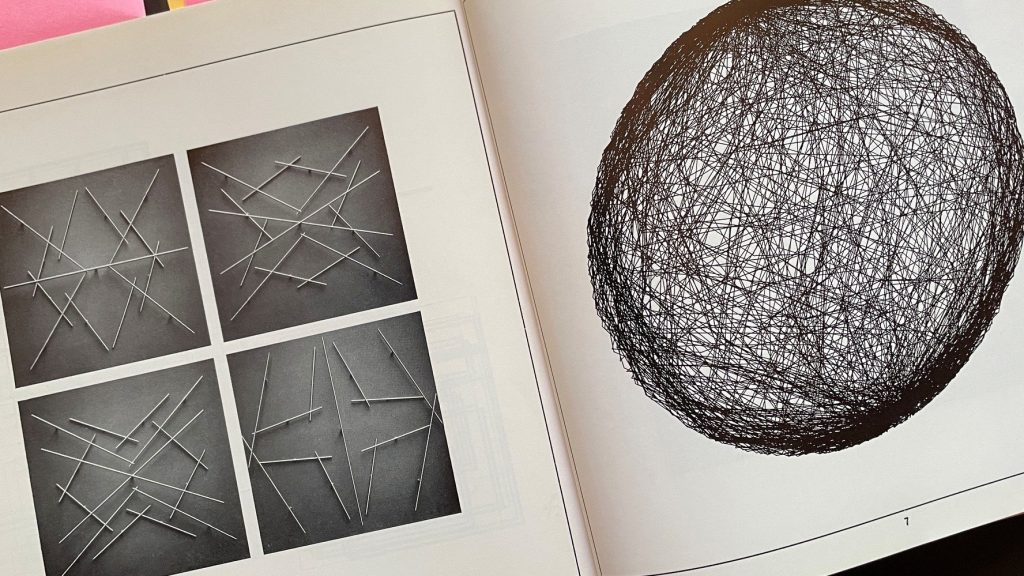
Subsequent exhibitions between 1969 and 1972 in Germany and Switzerland
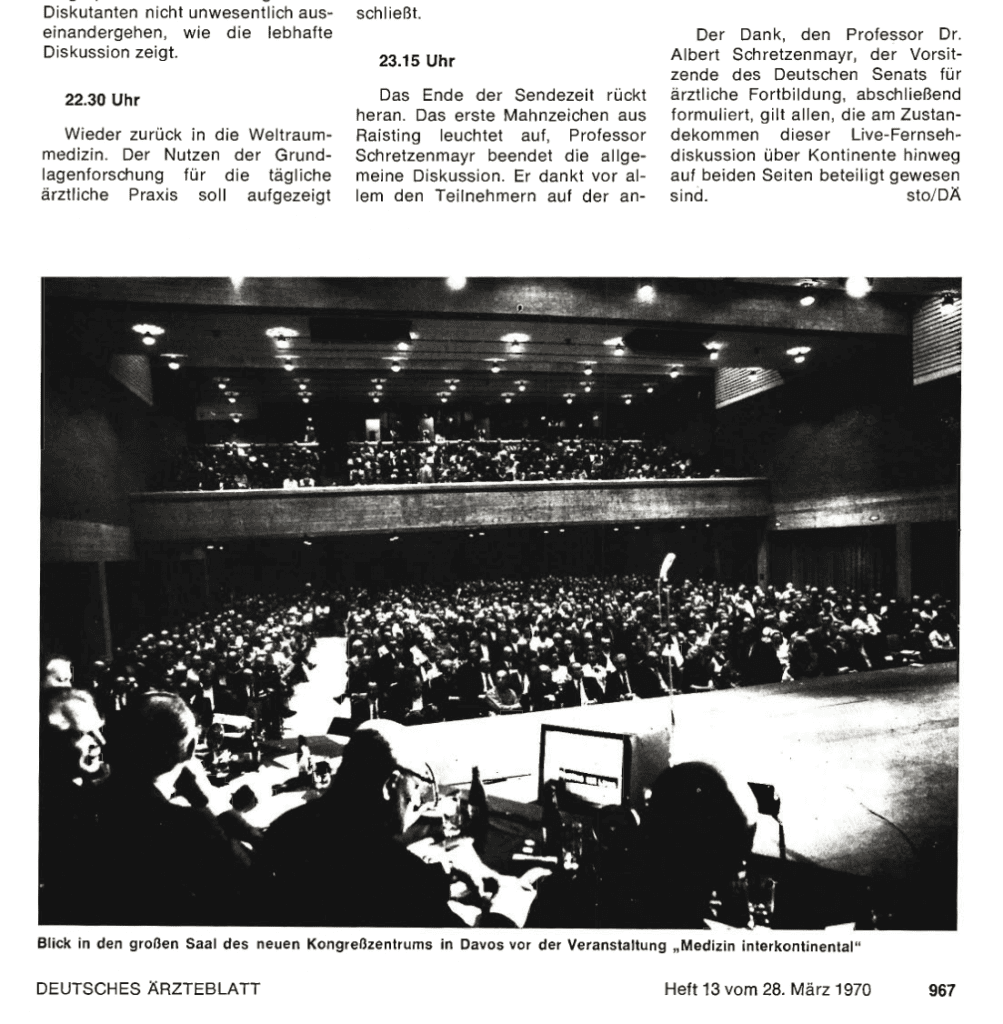
The exhibition was shown after Berlin between 1969 and 1972 in several cities titled On the Way to Computer Art, or simply Ways to Computer Art:
+++ Karlsruhe (Germany, Oktober 1969) – University of Karlsruhe, 2. Karlsruher Tage für Experimentelle Kunst und Kunstwissenschaft
+++ Davos (Switzerland, March 1970) – Kongresshalle, the historic medical congress with more than 3,000 participants; it included as part of the program the Medizin Interkontinental teleconference, held on March 13, 1970. Sponsored by the German Medical Association (Deutsche Ärztekammer), it linked U.S. medical experts of space flight in Houston to 25,000 physicians across European congress centers, including Davos, via satellite television. This served as a successful feasibility test for intercontinental medical education
+++ Kiel (Germany, May-June 1970) – Brunswiker Pavillon, combined with a semiar at the Kieler Hochschule für Gestaltung
+++ Offenbach (Germany, November 1970) – Werkkunstschule Offenbach, today’s University of Applied Sciences and Design, as part of the annual exhibition of students and lecturers
+++ Berlin (Germany, February-April 1971) – Internationales Design-Zentrum IDZ, accompanied by panel discussions, lectures, and in-depth guided tours
+++ Bielefeld (Germany, May-June 1972) – Kunsthalle Bielefeld
+++ Göttingen (Germany, June 1972) – Stadthalle, as a part of the 3. Kunstmarkt Göttingen including a conference
The Computer in Spacial and Interior Design
In 1972, spin-off travelling exhibitions of the same name, Wege zur Computerkunst (Ways to Computer Art), were created in collaboration with Swiss advertising designer Jean-Pierre Salzmann. It was tied to a series of regional conferences titled The Computer as a New Instrument for Interior and Spatial Design. Architects, urban planners, designers, and engineers gathered for regional conferences in prestigious showrooms at key industrial locations belonging to the sponsors: the German companies arterior textile/Vorwerk and the IT company Zeda, alongside Contraves (defense and automation) and Schuster + Co (interior design and space-planning ) from Switzerland. During the day at these regional symposia, pioneers lectured on the mathematical and technical benefits of computers in design. Running parallel to this, the exhibition Wege zur Computerkunst, set up for a few days, was publicly shown. The goal was also to demonstrate firsthand to the professional audience of the conference what was already possible with computers and how they could handle creative and spatial design tasks. The two curators supplemented the artwork from the previous exhibition with specialized, industry-specific exhibits by the sponsors. These included programmed weaving patterns and algorithmically designed wall coverings.The public exhibition of Wege zur Computerkunst featured works by Klaus Basset, Pierre Cordier, Hein Gravenhorst, Karl M. Holzhäuser, Gottfried Jäger, Manfred Mohr, Fieder Nake, Georg Nees, Karl Siebig und Ludwig Rase.
+++ Zurich (Switzerland) 20.-21.11.72
+++ Basel (Switzerland), 22.-23.11.72
+++ Stuttgart (Germany), 29.11.-3.12.72
+++ Munich (Germany), 27.-28.11. 72
+++ Dusseldorf (Germany), 4.-5.12.72
+++ Hamburg (Germany), 6.-7.12.72
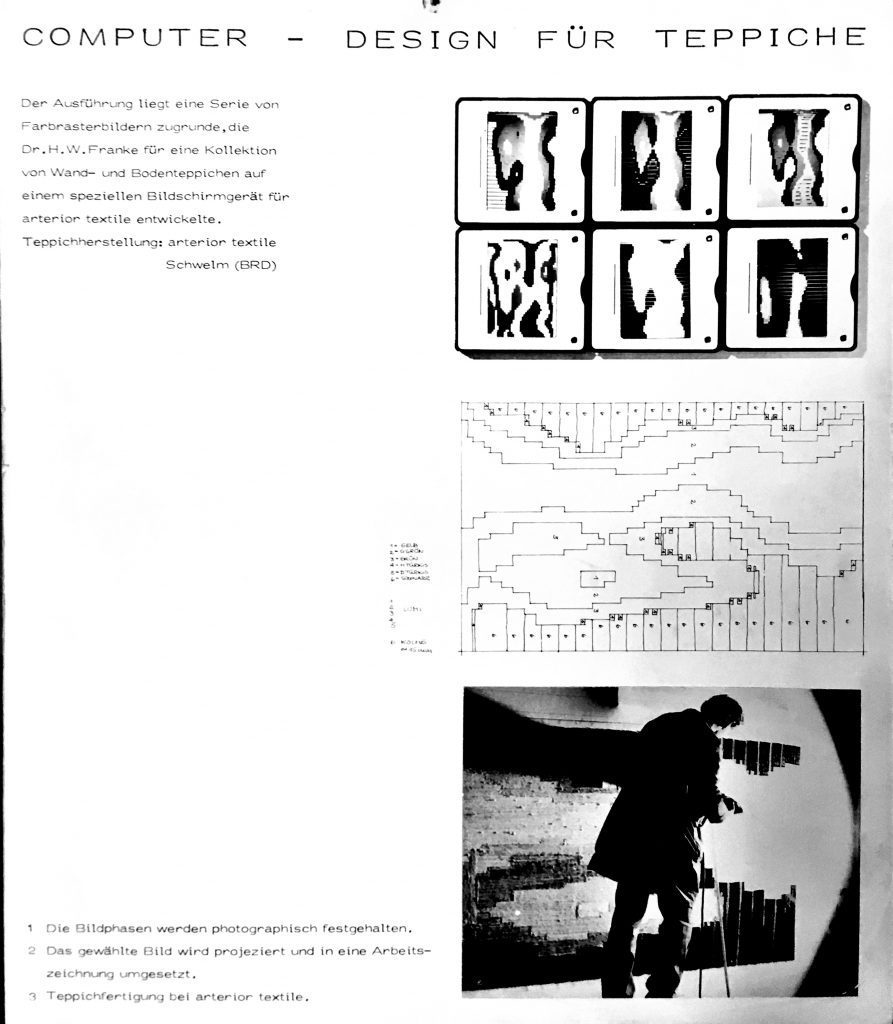
Ways to Computer Art – the launch of the Collaboration with the Goethe-Institut
As early as 1971, Franke began collaborating with the Goethe-Institut, also based on the exhibition shown in Berlin in 1968. The first two international stations of this Goethe Institut travelling exhibition were Cairo and Alexandria starting in 1971. This was followed by an exhibition series in 1973 in Porto Alegre, São Paulo (as part of the Arteônica exhibition), ans other cities. Further exhibitions in cooperation with the Goethe-Institut followed in 1973 in Bordeaux, Angers, and Toulouse. The exhibitions ran under the titles Vers l’art de l’ordinateur / Wege zur Computerkunst; in Bordeaux, it was presented as part of SIGMA 9 at the Centre d’Information SIGMA.
In 1975, the Goethe-Institut commissioned Franke to create a significantly expanded new concept for Wege zur Computerkunst (Paths to Computer Art). Starting in 1976, it was to succeed The Eye of Tomorrow from Hanover’s Galerie Clarissa, which the Goethe-Institut had also exhibited worldwide since 1972 in three packages under the title Impulse. Herbert W. Franke had already served as an advisor for this exhibition, edited the entire catalog, written the introductory text, and appeared several times in its supporting program. Franke’s expanded exhibition Wege zur Computerkunst was presented around 200 times worldwide from 1976 to 1986.
Museum Acquisition of the Historical Exhibits
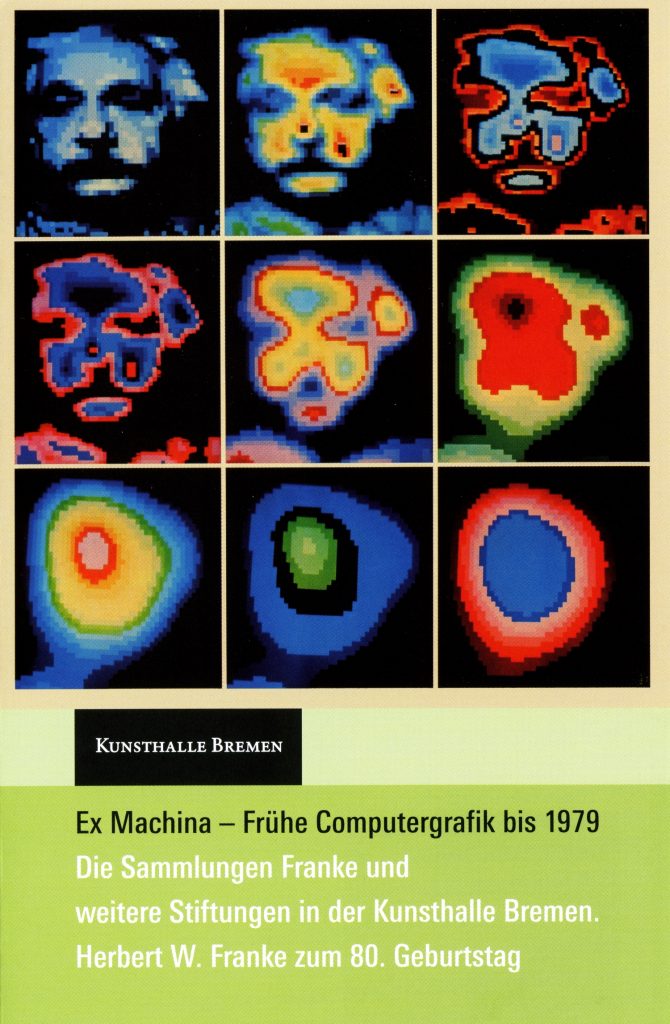
The pioneering works collected during this early phase and subsequent projects found a permanent museum home in the new millennium. Since 2006, a large part of the valuable Herbert W. Franke Collection is housed in the Department of Prints and Drawings (Kupferstichkabinett) at the Kunsthalle Bremen. The public was invited to appreciate it during a major anniversary exhibition, Ex Machina, held to mark Franke’s 80th birthday.