



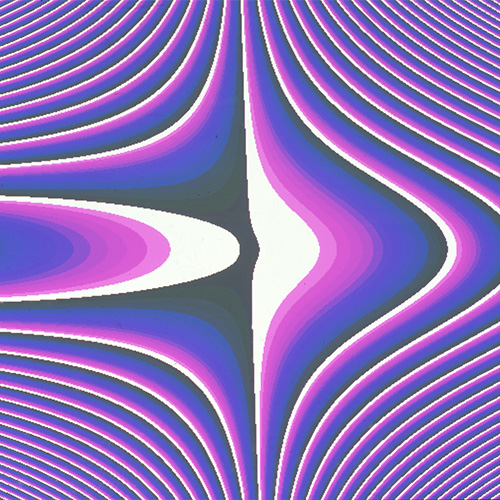
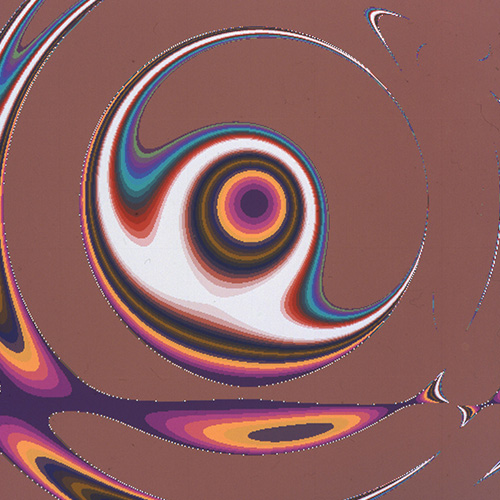
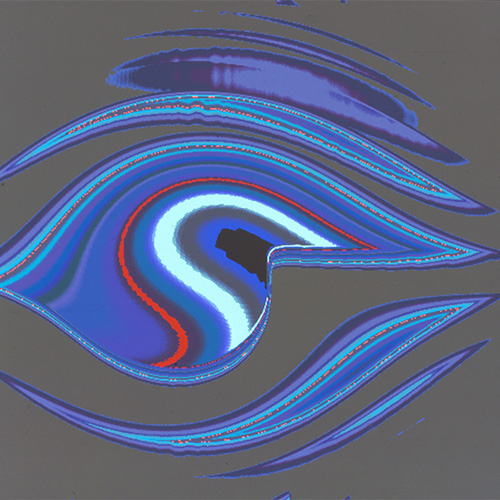
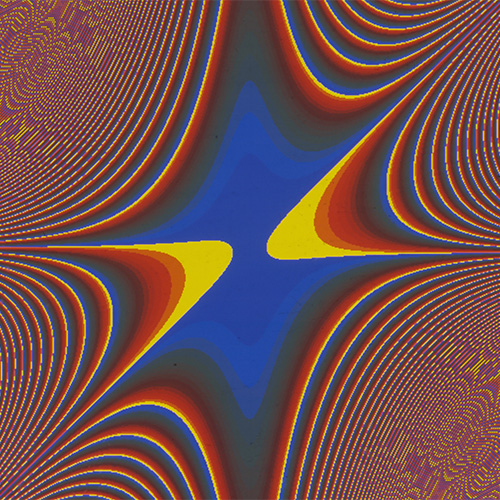
Fields Series (1990-1995)
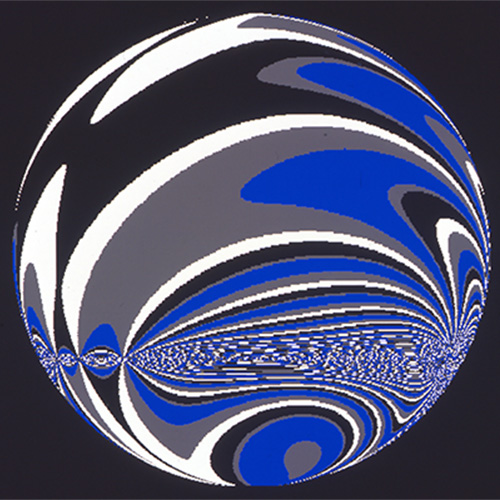
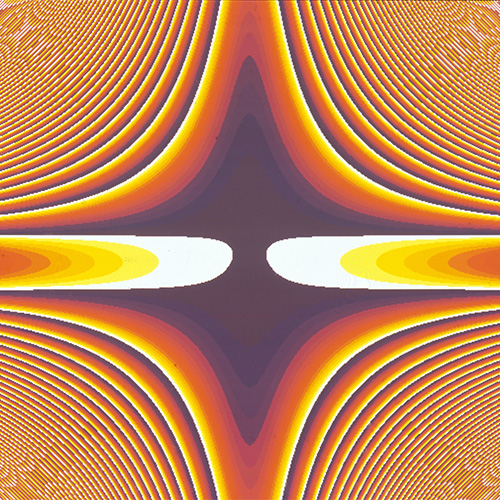
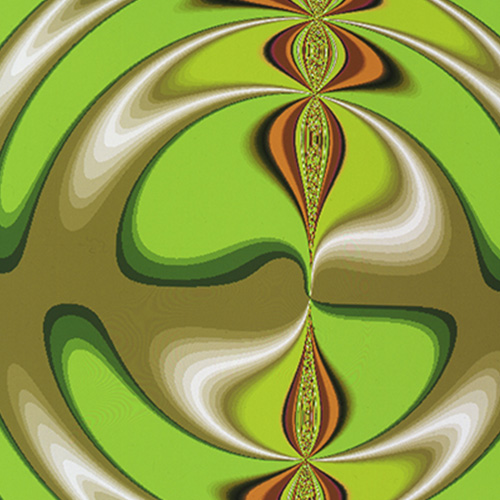
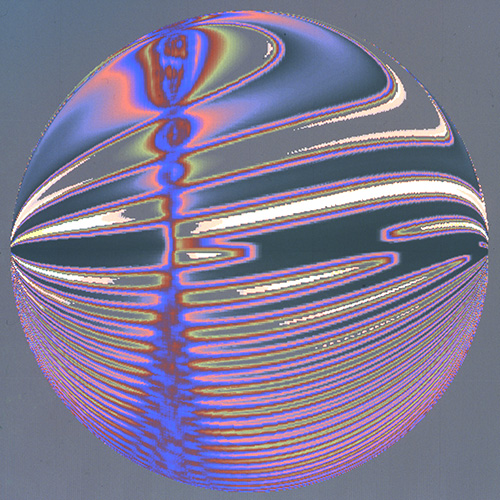
In the Fields series, Herbert W. Franke and Horst Helbig investigated the mathematics of matrix fields. However, instead of inserting purely abstract numbers into these matrix fields, they assigned color values directly to them, making matrices immediately tangible in a visual way, transforming the dry spreadsheet of a number matrix into a direct control instrument, where every mathematical transformation instantly triggered a visual color shift. The mathematical operations with such color-coded matrices (e.g., matrix multiplication) lead to visual results with surprising orders—giving rise to complex patterns, wave motions, and symmetries. This method made it possible to visualize mathematical structures that are inherently present in algebra, but usually remain hidden in a purely numerical representation of matrices.
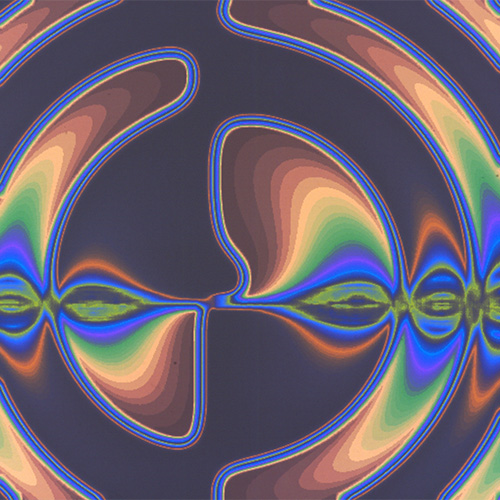
The term Math Art summarizes the results of a long series of experiments that Herbert W. Franke carried out together with the physicist and programmer Horst Helbig from 1980 onwards. It was about the use of mathematical methods, which were not developed and used for scientific purposes, but for aesthetic purposes. The main goal of the 15-year project (1980-1995) was the investigation of numerous mathematical disciplines regarding their aesthetic dimension and the visualization of complex mathematical relationships from algebraic formulas to stochastic relationships. In the course of the work, not only was the aesthetic dimension of formulas and functions explored, but a whole series of new graphic routines were also created, which were integrated into the software DIBIAS (for digital image evaluation system) as a fixed component, including representations in 2D and 3D as well as further processing with the methods of image transformation (picture processing). The heart of the computer was a Comtal Image Processing System and software DIBIAS with a resolution of up to 2048 x 2048 pixels and around 16 million colors.
Click here for the other series of Math Art:
Serie Algebra
Serie Buchstaben
Serie Bühnenbilder
Serie Fourier Transformationen
Serie Fraktale
Serie Komplexe Zahlen
Serie Logik
Serie Picture Processing
Serie Zufall